文章目录
一、单链表的逆置(两种方法)
1.无限头插法(简单)
这里所写代码都是带头结点的
首先我们来演示什么是无限头插法
1)首先断开头结点,并设立两个指针,指针p和指针q,指针p指向plist->next,
指针q指向p->next,(这里的思路可以参照之前写过的单链表销毁2)
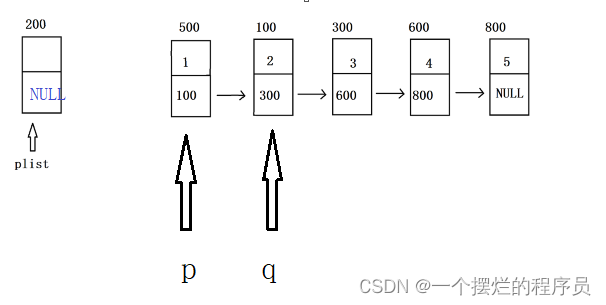
2)将头节点后面的节点依次头插到头结点后面,具体步骤看下图演示
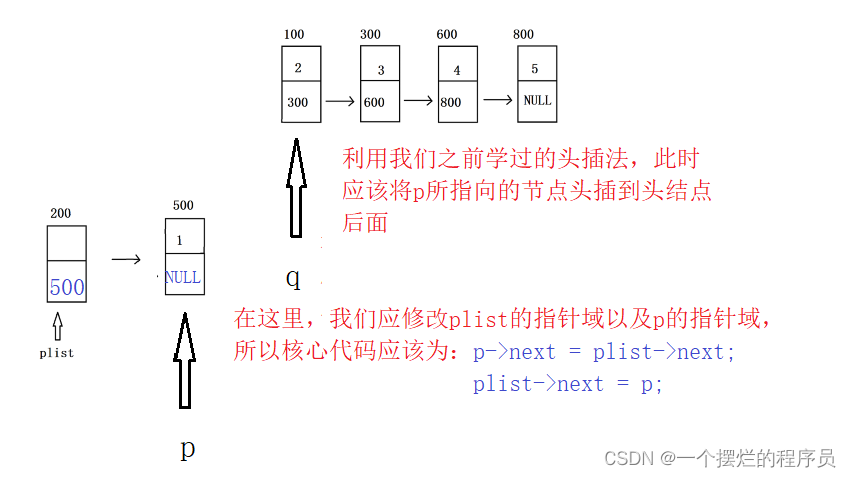
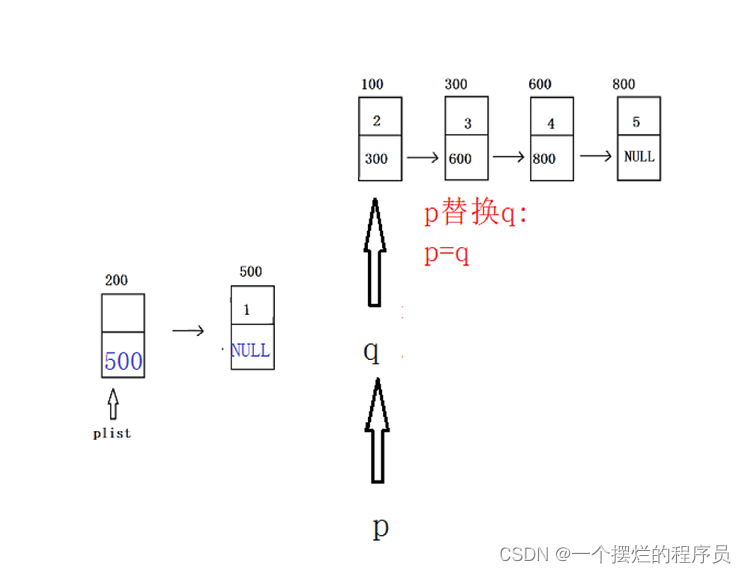
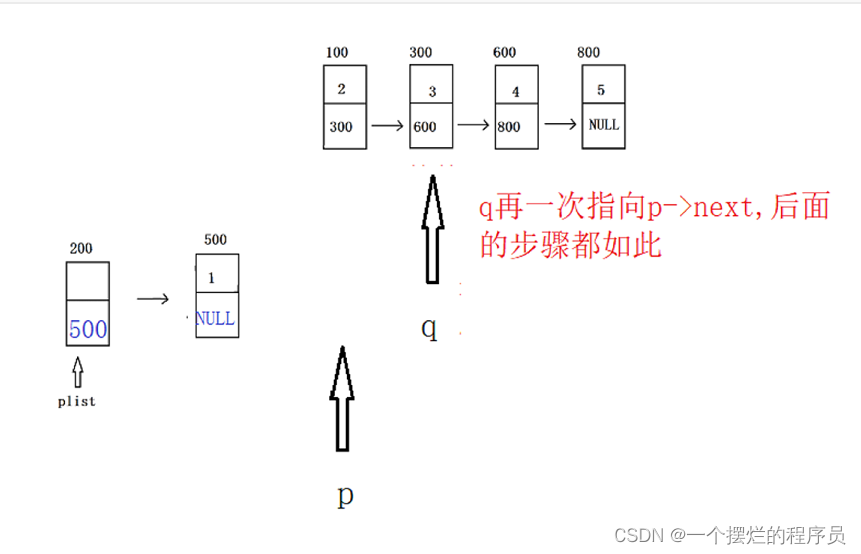
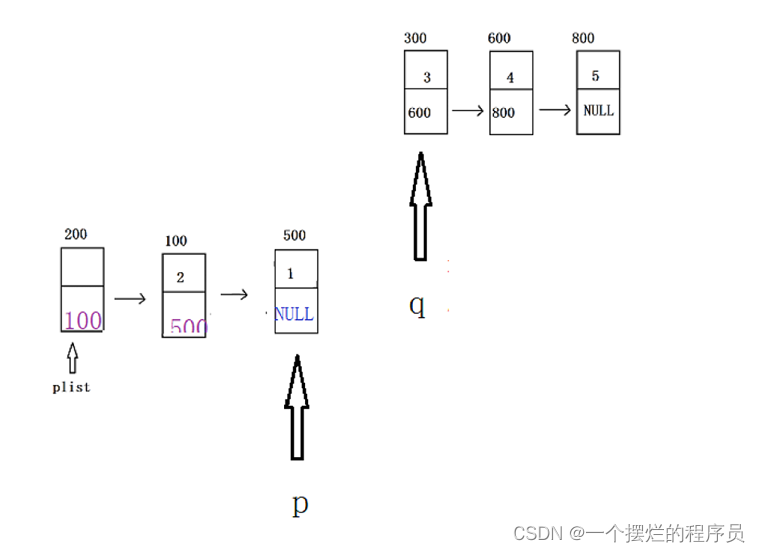
以此类推,就可以将链表完全逆置了
其次我们进行代码的实现
单链表基本操作
#include<stdio.h>
#include <cassert>
#include <stdlib.h>

typedef int ELEM_TYPE;

typedef struct Node {
	ELEM_TYPE data;//数据域(保存数据的有效值)
	struct Node* next;//指针域(保存下一个有效结点的地址)
}Node,*PNode;

//初始化
void Init_list(struct Node* plist) {
	assert(plist !=NULL);
	plist->next = NULL;
}

//按位置插
bool Insert_pos(PNode plist, int pos, ELEM_TYPE val) {
	assert(plist != NULL);
	//assert(pos >= 0 && pos <=Getlength(plist));
	struct Node* pnewnode = (struct Node*)malloc(1 * sizeof(struct Node));
	pnewnode->data = val;
	struct Node* p = plist;
	for (int i = 0; i < pos; i++) {
		p = p->next;
	}
	pnewnode->next = p->next;
	p->next = pnewnode;
	return true;
}

//打印
void Show(PNode plist) {
	assert(plist != NULL);
	struct Node* p = plist->next;
	for (; p != NULL; p = p->next) {
		printf("%d ",p->data);
	}
	printf("\n");
}
核心代码
//方法一,无限头插  如果需要逆置,至少需要存在两个节点
void Resver1(struct Node* plist) {
	assert(plist != NULL);
	int length = Getlength(plist);
	if (length < 2) {
		return;
	}

	//1.申请两个指针p和q 分别指向第一个有效节点和第二个有效节点
	struct Node* p = plist->next;
	struct Node* q = p->next;

	//2.断开头结点
	plist->next = NULL;

	//通过p和q的搭配,将所有节点依次头插进来
	while (p!=NULL) {
		q=p->next;
		p->next = plist->next;
		plist->next = p;
		p = q;
	}
}
测试代码
int main(){
    struct Node head;
	Init_list(&head);
	for (int i = 0; i <10; i++) {
		Insert_pos(&head, i, i + 1);
	}
	Show(&head);

	Resver1(&head);
	Show(&head);
}
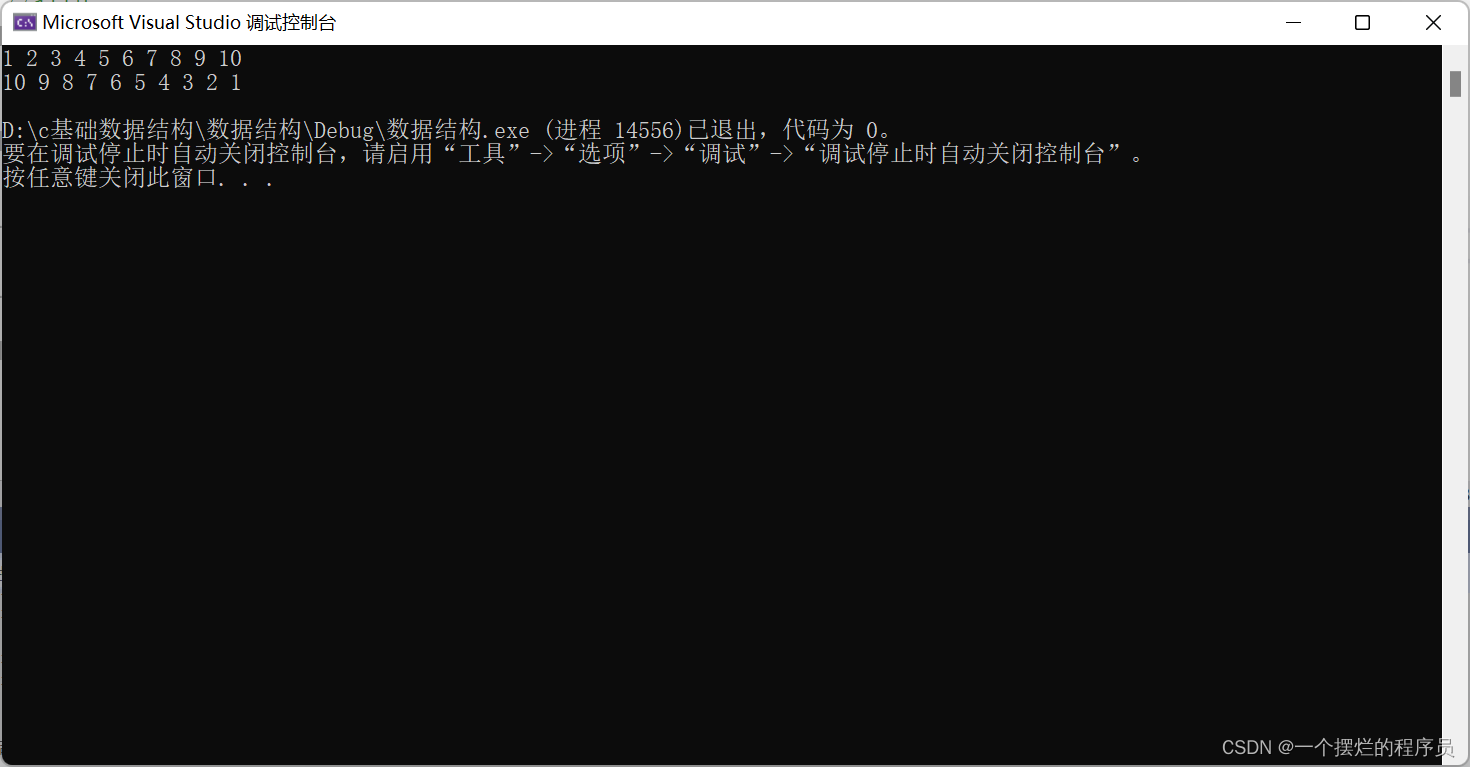
运行结果
2.利用三个指针(较难)
图示法演示具体操作
这个方法较上一个方法有些难度
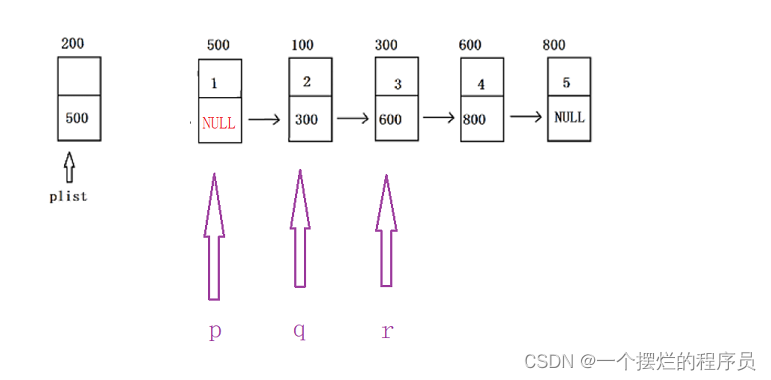
1)设置三个指针,并断开头结点,将p设置为空
2)q的指针域保存p的地址,从而将箭头反转

3)p=q; q=r; 从而实现指针的反复利用
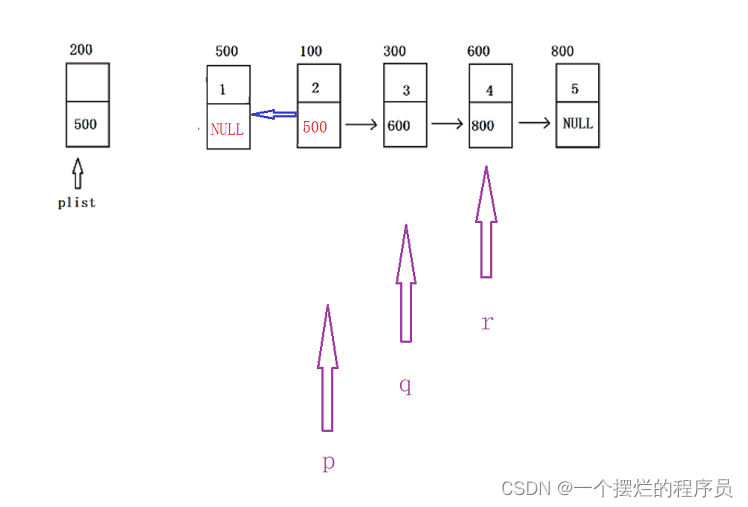
4)将头结点插入到p节点后面

思考:这个循环截至条件是什么? 答:我们知道在p节点之后还要插入头结点,所以p指针是不能指向空的,此时只有当q为空时,循环才会结束
代码实现
单链表具体操作
#include<stdio.h>
#include <cassert>
#include <stdlib.h>

typedef int ELEM_TYPE;

typedef struct Node {
	ELEM_TYPE data;//数据域(保存数据的有效值)
	struct Node* next;//指针域(保存下一个有效结点的地址)
}Node,*PNode;

//初始化
void Init_list(struct Node* plist) {
	assert(plist !=NULL);
	plist->next = NULL;
}

//按位置插
bool Insert_pos(PNode plist, int pos, ELEM_TYPE val) {
	assert(plist != NULL);
	//assert(pos >= 0 && pos <=Getlength(plist));
	struct Node* pnewnode = (struct Node*)malloc(1 * sizeof(struct Node));
	pnewnode->data = val;
	struct Node* p = plist;
	for (int i = 0; i < pos; i++) {
		p = p->next;
	}
	pnewnode->next = p->next;
	p->next = pnewnode;
	return true;
}

//打印
void Show(PNode plist) {
	assert(plist != NULL);
	struct Node* p = plist->next;
	for (; p != NULL; p = p->next) {
		printf("%d ",p->data);
	}
	printf("\n");
}
核心代码
//第二种方法 三个指针
void Reserve2(PNode plist) {
	assert(plist != NULL);
	int length = Getlength(plist);
	if (length < 2) {
		return;
	}
	struct Node* p = plist->next;
	struct Node* q = p->next;
	struct Node* r ;
	p->next = NULL; //第一步操作
	while (q != NULL) {
		r=q->next;
		q->next = p; //第二步操作
		p = q;     //第三步操作
		q = r;
	}
	plist->next = p;  //第四步操作
}
测试代码
int main(){

	struct Node head;
	Init_list(&head);
	for (int i = 0; i <10; i++) {
		Insert_pos(&head, i, i + 1);
	}
	Show(&head);

	Resver1(&head);
	Show(&head);

	Reserve2(&head);
	Show(&head);
}
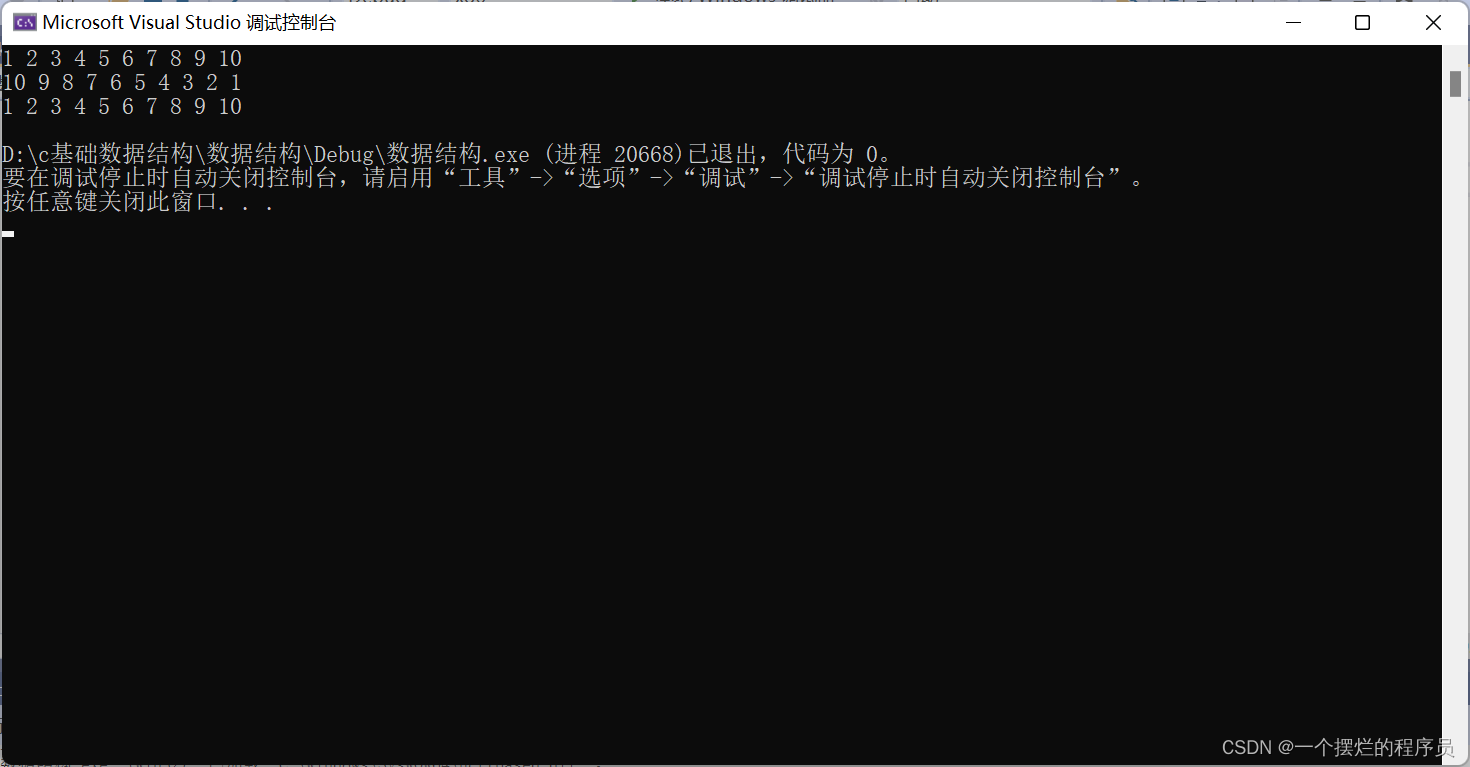
测试结果
二、如何判断两个链表是否存在交点,如果存在,则返回第一个相交点(中等难度)
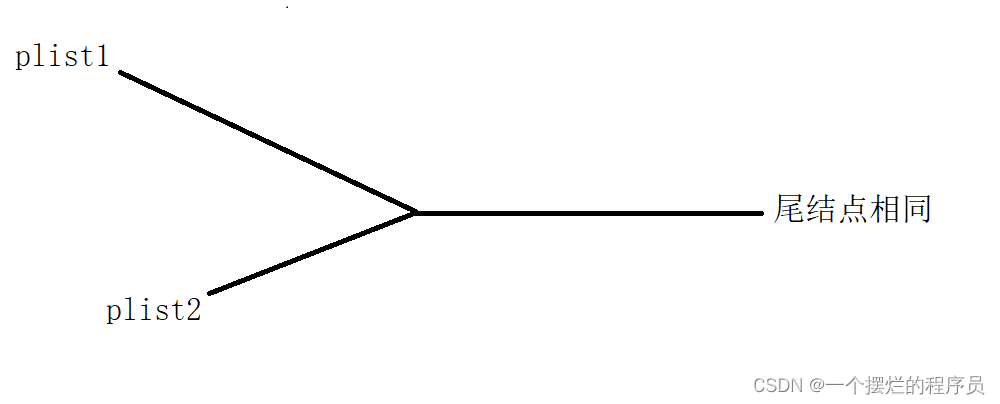
1)这道题的思路是:尾结点相同,即两个单链表相交,所以我们需要定义两个指针p和q分别指向单链表头结点的下一个节点,然后遍历到最后一个节点。
2)但是我们又该如何判断相交点在哪里呢?我们这里要注意到一个问题是两个单链表的长度有可能不相同,所以我们应该将长度较长的单链表先进行遍历,遍历的长度为他们之间链表长度的差值,然后同时向后遍历,直到两个节点相同
由于这道题思路较为简单,于是我们直接进行代码的实现
单链表基本操作
#include<stdio.h>
#include <cassert>
#include <stdlib.h>

typedef int ELEM_TYPE;

typedef struct Node {
	ELEM_TYPE data;//数据域(保存数据的有效值)
	struct Node* next;//指针域(保存下一个有效结点的地址)
}Node,*PNode;

//初始化
void Init_list(struct Node* plist) {
	assert(plist !=NULL);
	plist->next = NULL;
}

//按位置插
bool Insert_pos(PNode plist, int pos, ELEM_TYPE val) {
	assert(plist != NULL);
	//assert(pos >= 0 && pos <=Getlength(plist));
	struct Node* pnewnode = (struct Node*)malloc(1 * sizeof(struct Node));
	pnewnode->data = val;
	struct Node* p = plist;
	for (int i = 0; i < pos; i++) {
		p = p->next;
	}
	pnewnode->next = p->next;
	p->next = pnewnode;
	return true;
}

//打印
void Show(PNode plist) {
	assert(plist != NULL);
	struct Node* p = plist->next;
	for (; p != NULL; p = p->next) {
		printf("%d ",p->data);
	}
	printf("\n");
}
核心代码
struct Node* Intersection(struct Node *plist1,struct Node* plist2) {
	//0.安全性处理
	assert(plist1 != NULL&&plist2!=NULL);

	//1.定义两个指针,让它们分别走到到最后的节点处,判断是否相交
	struct Node* p = plist1->next;
	struct Node* q = plist2->next;
	for (; p != NULL; p = p->next);
	for (; q != NULL; q = q->next);
	if (p== q) {
		printf("存在交点\n");
	}

	//3,找到相交点
	int len1 = Getlength(plist1);
	int len2 = Getlength(plist2);
	struct Node* m = (len1 > len2) ? plist1 : plist2;//将较为长的单链表给plist1
	struct Node* n = (len1 > len2) ? plist2 : plist1;//将较为短的链表给plist2

	//4.让两链表起始长度相同,abs库函数,意思为:|len1-len2|
	for (int i = 0; i < abs(len1-len2); i++) {
		m = m->next;
	}

	//5.找到相交点
	while (m != n) {
		m = m->next;
		n = n->next;
	}
	return m;
}
测试代码
int main(){
	struct Node head1, head2;
	Init_list(&head1);
	for (int i = 0; i < 10; i++) {
		Insert_pos(&head1, i, i + 1);
	}
	Show(&head1);

	Init_list(&head2);
	for (int i = 0; i <=15; i++) {
		Insert_pos(&head2, i,i+11);
	}
	Show(&head2);

  //将两个单链表手动相交
	struct Node* p = &head2;
	for (int i = 0; i < 12; i++) {
		p = p->next;
	}
	struct Node* q = &head1;
	for (int i = 0; i < 7; i++) {
		q = q->next;
	}

	p->next = q->next;
	Show(&head1);
	Show(&head2);

	struct Node* tem= Intersection(&head1, &head2);
	printf("%d", tem->data);

}
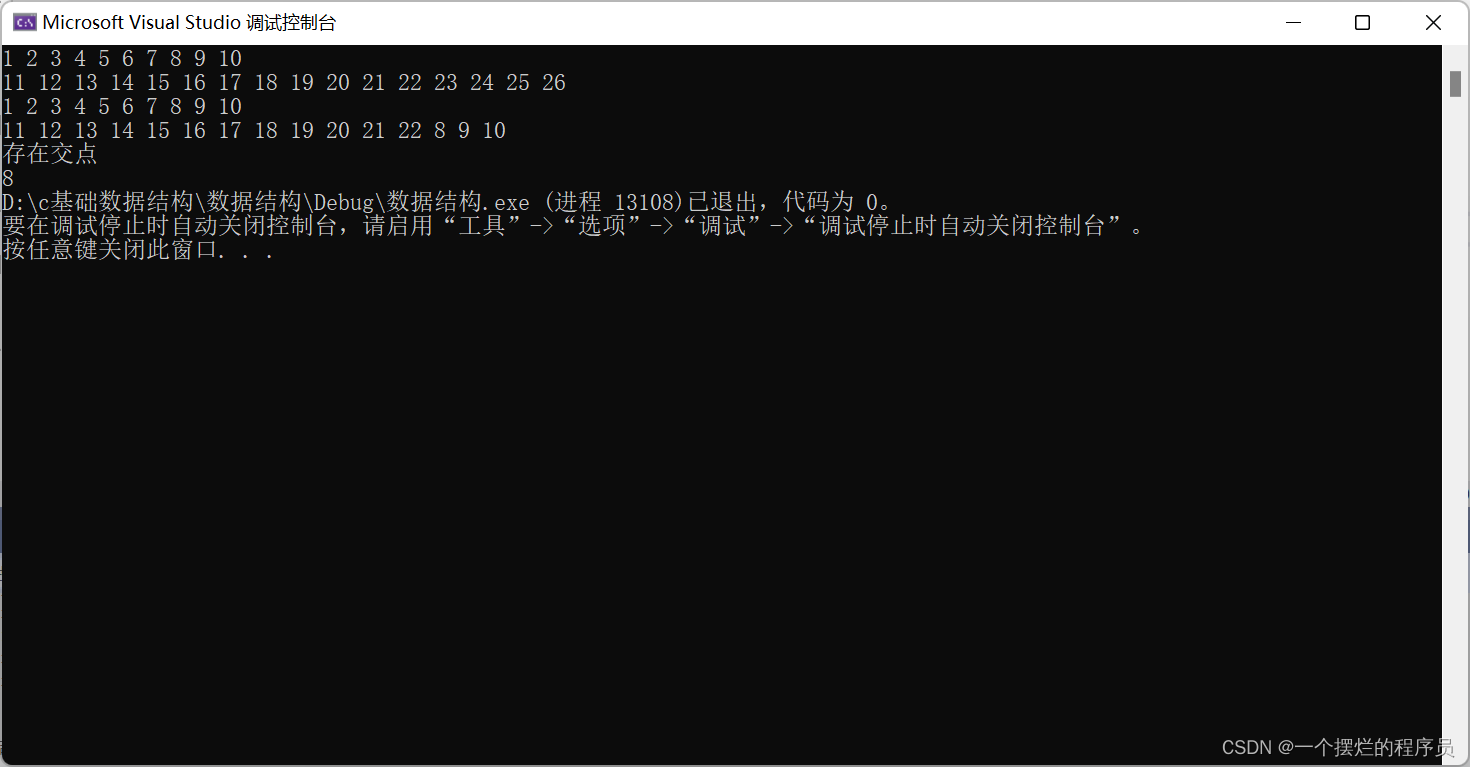
运行结果
三、判断一个单链表是否存在环,如果存在环,则找到如环点(较难)
画图演示
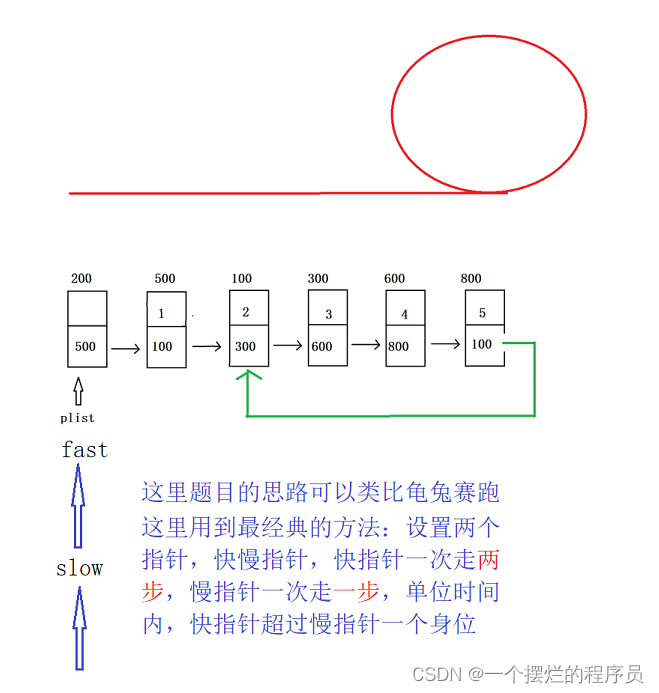
那我们如何发现此单链表存在环呢?根据快慢指针,我们知道,如果存在环,则当快慢指针都进入环的时候,一定会在环内相遇,而当不存在环的时候,快指针在遇到NULL时,直接退出,循环结束就可以了
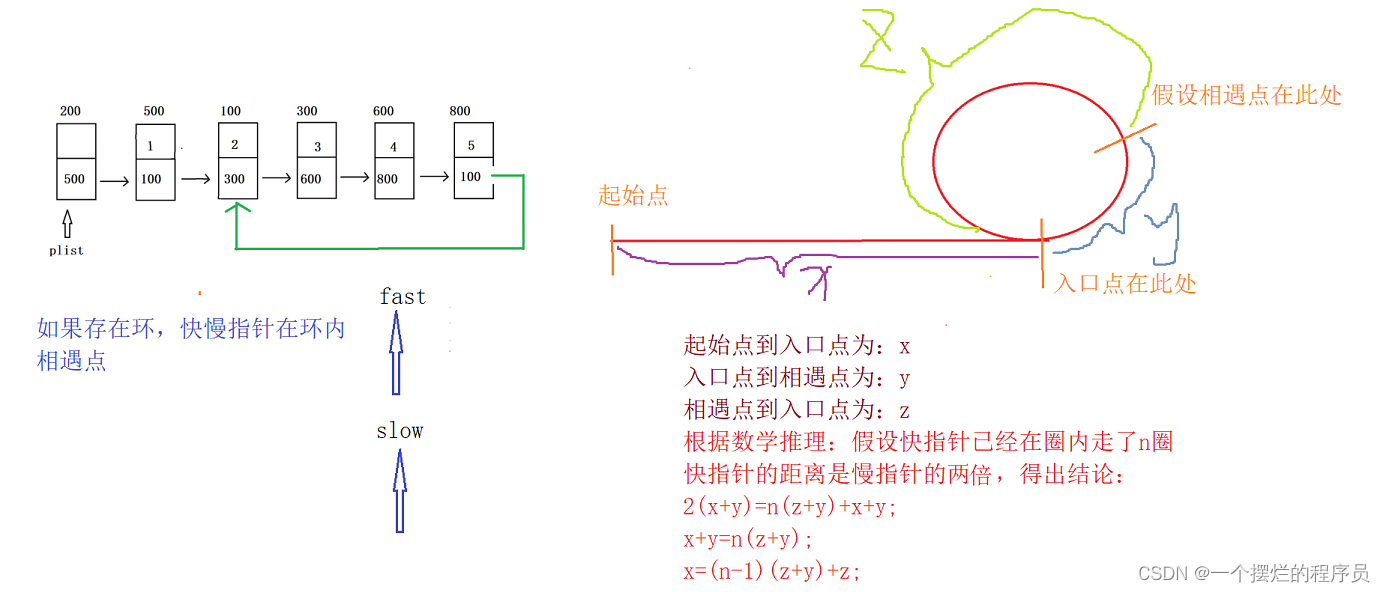
由上图可知:我们最终的得出结论,让相遇处的结点与起始点的结点同时出发,这样当两节点相同时,便是入口处的节点
代码实现
单链表基本操作
#include<stdio.h>
#include <cassert>
#include <stdlib.h>

typedef int ELEM_TYPE;

typedef struct Node {
	ELEM_TYPE data;//数据域(保存数据的有效值)
	struct Node* next;//指针域(保存下一个有效结点的地址)
}Node,*PNode;

//初始化
void Init_list(struct Node* plist) {
	assert(plist !=NULL);
	plist->next = NULL;
}

//按位置插
bool Insert_pos(PNode plist, int pos, ELEM_TYPE val) {
	assert(plist != NULL);
	//assert(pos >= 0 && pos <=Getlength(plist));
	struct Node* pnewnode = (struct Node*)malloc(1 * sizeof(struct Node));
	pnewnode->data = val;
	struct Node* p = plist;
	for (int i = 0; i < pos; i++) {
		p = p->next;
	}
	pnewnode->next = p->next;
	p->next = pnewnode;
	return true;
}
//判空
bool IsEmpty(PNode plist) {
	if (plist->next == NULL) {
		return true;
	}
	return false;
}
核心代码
struct Node* Ring(struct Node* plist) {
	//.安全性处理
	assert(plist != NULL);
	if (IsEmpty(plist)) {
		return NULL;
	}
	//1.定义两个快慢指针,快指针一次走两步,慢指针一次走一步
	struct Node* fast = plist;
	struct Node* slow = plist;
	slow = slow->next;
	fast = fast->next;
	if (fast != NULL) { //进行安全性处理
		fast = fast->next;
	}
	//2.同步向后走
	while (fast != slow && fast != NULL) {
		slow = slow->next;
		fast = fast->next;
		if (fast != NULL) { //进行安全性处理
			fast = fast->next;
		}
	}
	if (fast == NULL) {
		return NULL;
	}
	else {
		printf("存在入环点\n");
	}
	//如果if没有进去,则代表有环,找到入环点
	struct Node* p = plist;
	while (fast != p) {
		fast = fast->next;
		p = p->next;
	}
	return p;
}
测试代码
int main(){
    //1.插入数据
	struct Node head;
	Init_list(&head);
	for (int i = 0; i < 10; i++) {
		Insert_pos(&head, i, i + 1);
	}
	//2.手动给单链表设置一个入环点
	struct Node* q = &head;
	for (int i = 0; i < 10; i++) {
		q = q->next;
	}
	struct Node* p = &head;
	for (int i = 0; i < 6; i++) {
		p = p->next;
	}

	q->next = p;

   //3.测试入环点的数据
	struct Node* tem =  Ring(&head);
	printf("%d", tem->data);
四、单链表给一个随机节点的地址,如何在o(1)时间内删除这个节点(不能是尾结点)(简单)
思路:我们知道了这个节点的地址,但是由于是单链表,我们不清楚头结点在哪里,因此我们始终无法找到当前待删除节点的上一个节点,所以我们只能进行替换的方法,就是将待删除节点的下一个节点的数据域给到待删除节点,然后删除待删除节点的下一个节点
核心代码
bool Del_Node(struct Node* del_node) {
	assert(del_node != NULL);
	//狸猫换太子
	if (del_node->next == NULL) {//狸猫得存在
		return false;
	}
	del_node->data = del_node->next->data; //将狸猫化妆为太子
	struct Node* p = del_node->next; //让p指向狸猫
	del_node->next = p->next;  //跨越指向
	free(p);  //释放待删除节点
	return true;
}