
A fiber media converter is a device that converts and connects different media. Cables commonly used for Ethernet are copper cables such as Cat 5. On the other hand, cables using optical fibers are also used for the purpose of improving performance such as communication distance and speed. A media converter allows you to connect these different media. So, here let's know more about fiber converters.
What is Fiber Media Converter?
A fiber optic media converter, commonly referred to as a fiber media converter, is a device used in computer networking that allows different networking media to be connected to a fiber optic cable network. It is mainly used in connecting older copper-based cabling systems, such as twisted pairs, to increasingly fiber optic networks. Media Converters are commonly used in large metropolitan area networks (MANs), as well as large business networks, called enterprise networks.
Types of Fiber Media Converter
The most common type of media converter in the modern world is copper to fiber converter that converts signals from twisted-pair cables to optical fiber. At the same time, there are modifications of OEO - media converters, that is, converting the signal "optics-electrical-optics".
A huge number of manufacturers offer many different types of converters at different media converter price. They all differ in their characteristics, functions, and purpose. These are...
Fiber to Fiber Media Converter
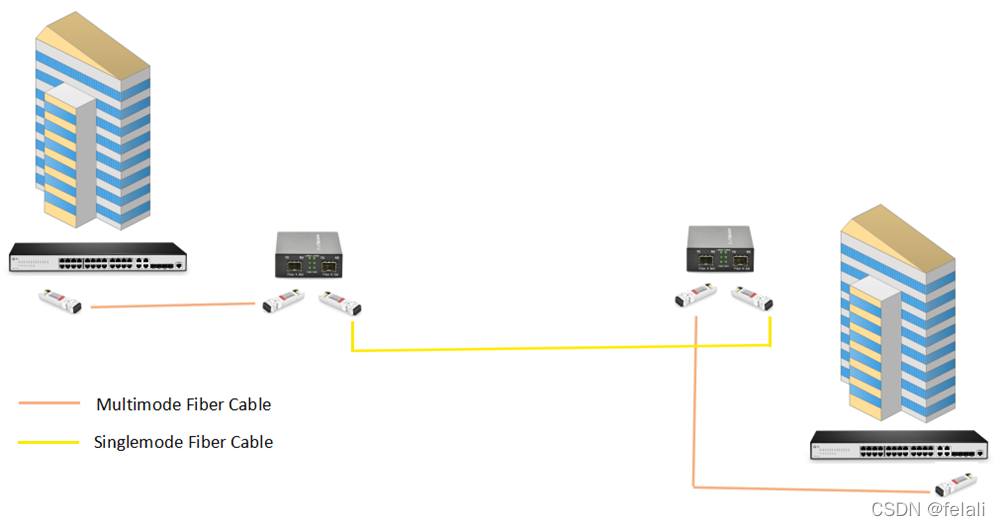
This type of device is also called single mode to multimode converter or multimode to single mode fiber converter, which can provide communication between multimode (MM) and single-mode fiber ( (SMF), between different sources of "power" fiber, and between two fibers and one fiber. In addition, they can convert one wavelength to another.
PoE Media Converters
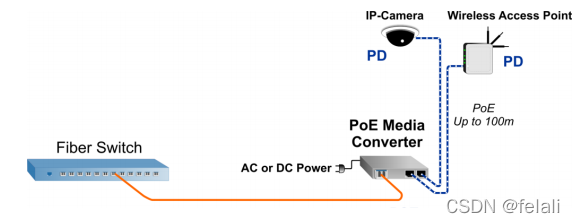
Optical Power-over-Ethernet (PoE) converters provide reliable and comfortable operation of PoE-powered devices. PoE media converters supply power over UTP copper cable to devices ranging from IP phones to Wi-Fi devices.
Managed Media Converters
This equipment gives network administrators complete control over data, bandwidth, and traffic. This allows administrators to remotely and securely manage and troubleshoot the network to achieve and maintain optimal performance and reliability.
Unmanaged Media Converters
These devices are plug-and-play converters. They are easy to install and troubleshoot. Unlike controlled transmitters, they do not provide the same monitoring and setting functionality.
Copper-to-Fiber Media Converter
Supporting the IEEE 802.3 standard, copper-to-fiber converters provide connectivity for devices operating from the mainstream Fast Ethernet to 10 Gigabit Ethernet. Some converters support 10/100 or 10/100/1000 speed switching, which allows equipment with different baud rates and interface types to be integrated into one seamless network.

Ethernet Copper-to-Fiber Media Converters
The first Ethernet media converter module family, which has abundant functions of Pearl, connects UTP copper to fiber transparently by incorporating it into the high-density Pearl media converter chassis.
First Ethernet media converter products provide an economical way to extend existing network distances, continue to use conventional non-fiber optic devices, or extend between opposite devices. For network administrators, the media converter module with extended functions is the best choice for network construction or network failure response.
The links at both ends are completely transparent, and the Auto-Negotiation, Link Pass-Through, Far-End Fault, Auto-MDIX, and Pause features enable more efficient fault handling for on-site maintenance. Make it easy. These features of the PearlFirst Ethernet Media Converter Module are the best choice for network administrators due to cost and time savings, worldwide technical support, and lifetime warranty.
TDM Copper-to-Fiber Media Converters
Datacenter media converters expand the creative life of existing copper-based switches and give bit-by-bit progress from copper to fiber. The media converter can likewise be utilized with new copper switches with fixed RJ-45 ports. This is essentially less expensive than an identical fiber switch. Here, network executives can change over just choosing copper ports to multimode or single-mode fiber depending on the situation, expanding the flexibility of the server farm while decreasing general costs.
Serial-to-Fiber Media Converters
Serial to Fiber Media Converters straightforwardly interfaces RS422, RS232, and RS485 gadgets to fiber-optic link. By sending information over optical fiber, these sequential media converters give a prudent way to broaden the compass of sequential gadgets.

Advantages Of Fiber Media Converter
Many different networking protocols can be used with a fiber-optic media converter. Ethernet, Fast Ethernet, and Gigabit Ethernet are examples found in small home networks. Faster data protocols, such as T1 and T3, also known as DS3/E3, can also be used. Fiber-optic media converters will also support several types of cable, such as coaxial cable and twisted pair, commonly referred to as Cat-5 or Cat-6. They can also include different types of fiber-optics, such as multi-mode and single-mode.
Another advantage of a fiber-optic media converter is that it can connect different local area network (LAN) types. It can also modify speed and duplex settings. For example, a fiber-optic converter that has switching capability can connect a network segment that uses half-duplex, a system that allows two-way communication, but only one at a time. Way faster, for full-duplex systems. A full-duplex system allows for simultaneous two-way traffic. Half-duplex could be a legacy 10baseT system, and the new system could be 100baseT, and the converter would allow them to communicate over a fiber connection.
In the case of large LANs, fiber-optic media converters are helpful in connecting separate networks that cover a large area. It can operate separate LANs as a single large LAN. For example, if you had a college campus that had a network for each department, connecting them with a fiber-optic media converter would allow for a fast and almost seamless connection. This is especially helpful because most LANs are still based on slow, copper-based wiring. The fiber-optic media converter can extend up to 80 miles using single-mode fiber, a much longer distance than older copper-based systems.
Another advantage of a fiber-optic media converter is media converter price, as a network that is entirely fiber-optic can be expensive. They allow a gradual upgrade from older, copper-based network types to fiber-optic networks. Fiber-optic networks have several advantages over copper networks, including higher speeds of delivery, more reliable data delivery, and less interference from external sources. Converter types are also available in a wide range of sizes and functionality. They range from small, simple devices to high-end systems that have a multitude of functions.
Applications of Fiber Media Converter
Fiber has already been established for LAN backbone applications and is now infiltrating horizontal cabling. Fiber carries more data than copper, making it suitable for high-throughput applications such as streaming media and VOIP. Moreover, as the price of copper rises, the price of installing fiber continues to fall, making it an economical choice.
Copper-to-fiber fiber media converters help mitigate the financial shock of migrating network equipment to fiber. These media converters are a simple and inexpensive solution for matching copper ports to your fiber infrastructure. From data converters to desktops, central offices to homes, media converters bring fiber connectivity to the media in which copper has been the choice for many years.
QSFPTEK provides media converters, including gigabit media converter, 10G media converter and PoE media converter. You can get quote via sales@qsfptek.com.